
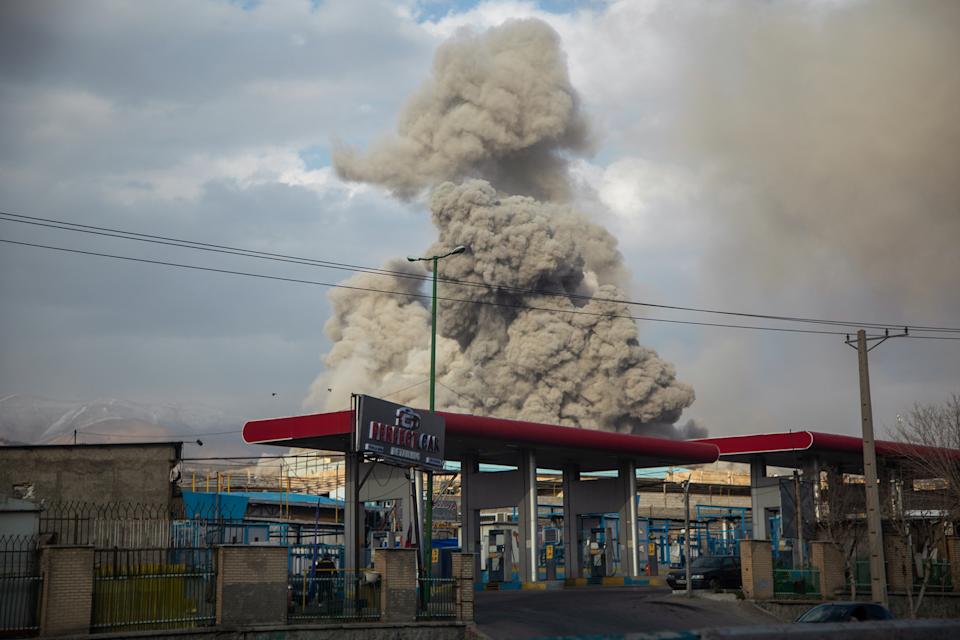
The escalation of military conflict between the United States and Iran has introduced a significant layer of volatility to global markets, threatening to disrupt a resilient US economy. Following the launch of targeted strikes, crude oil prices surged by approximately 8% in New York trading, raising immediate concerns regarding energy-led inflation. As the geopolitical situation unfolds, investors are closely monitoring the potential for a sustained supply shock that could alter the Federal Reserve’s monetary policy trajectory.
Energy Markets and the Strait of Hormuz Risk
The primary transmission mechanism for this geopolitical shock is the energy sector. With approximately 20% of the world’s seaborne oil and gas passing through the Strait of Hormuz, any prolonged blockage by Iranian forces poses a severe threat to global supply chains.
Current market data indicates that tanker traffic has already slowed significantly. Analysts suggest that if disruptions persist, crude prices could stabilize above $100 per barrel. According to industry estimates, such a rally would likely push US retail gasoline prices toward $4.50 a gallon, up from the current $3 average.
Inflationary Pressures and Federal Reserve Outlook
The sudden spike in energy costs complicates the inflation landscape for the Federal Reserve. Prior to the conflict, the central bank had already paused its interest rate cuts due to stubborn price data.
Former Treasury Secretary Janet Yellen noted that the current instability essentially puts the Fed “on hold,” as officials must now weigh the inflationary impact of high energy costs against the potential for slowing consumer spending. While the US is currently a net energy exporter—providing a buffer that did not exist during previous oil shocks—the distributional effects remain a concern. Rising fuel costs act as a “tax” on household consumption, which could dampen GDP growth in the coming quarters.
Macroeconomic Scenarios: Growth vs. Stagflation
Economists are currently modeling two primary outcomes based on the duration of the military campaign:
- Moderate Disruption: A short-term conflict lasting four to five weeks may lead to temporary price spikes with minimal long-term impact on US GDP, potentially bolstered by increased domestic energy production.
- Prolonged Conflict: A widening war could trigger a “bout of stagflation,” characterized by rising insurance premiums, rerouted cargo vessels, and logistical bottlenecks. In this scenario, US growth could slow to between 0.5% and 1.5%, or even enter a brief period of contraction.
Impact on Global Trade and Equities
Beyond energy, the conflict risks cooling the recent rally in equity markets, which has been a significant driver of consumer wealth and spending. Furthermore, the geopolitical friction could complicate trade relations with China, a major buyer of Iranian oil. With a high-level visit to Beijing scheduled for later this month, the administration faces the challenge of managing a war while attempting to maintain stability between the world’s two largest economies.