
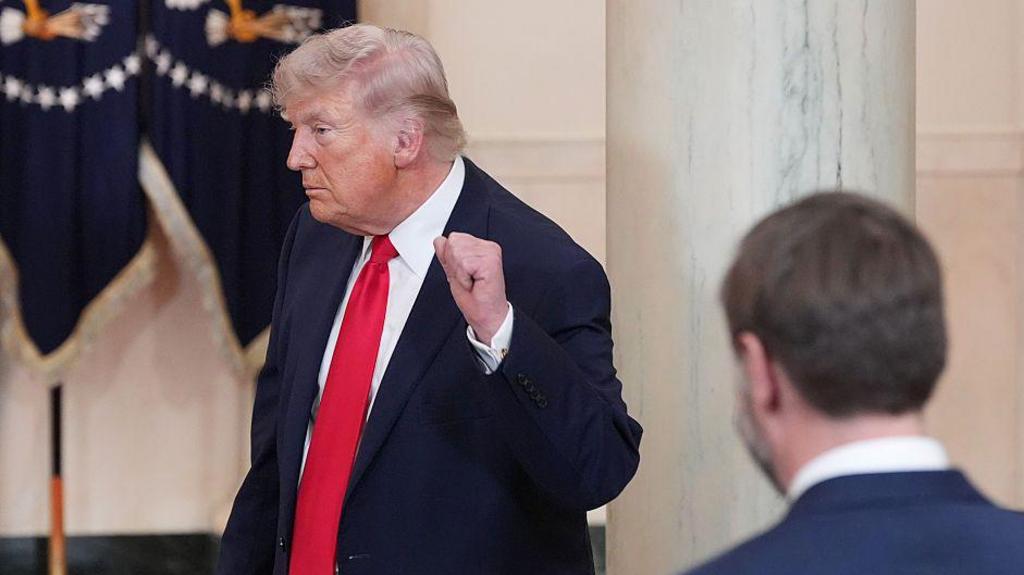
The atmosphere in Washington D.C. on the evening of April 1, 2026, was anything but a joke. Standing in the Cross Hall of the White House, framed by a phalanx of American flags, President Donald Trump addressed a nation that is increasingly weary of a conflict that has lasted just over a month but felt like an eternity. With his approval ratings sliding and the American middle class feeling a sharp sting at the gas pump, the President’s message was clear: “We are getting very close.”
But as the President spoke of a looming victory, many are asking if the “finish line” is a reality or a rhetorical shield against mounting domestic pressure. Between the $4-a-gallon gas prices and the ongoing blockade of the Strait of Hormuz, the geopolitical stakes have never been higher.
The “Victory” Narrative: Strategic Goals or Political Survival?
During his 19-minute address, President Trump laid out a retroactive justification for the military campaign that began in late February. Unlike the informal, baseball-cap-wearing video announcement on February 28, this was a traditional “Commander-in-Chief” moment. Trump claimed that the core strategic objectives—neutralizing Iran’s military, ending support for regional proxies, and dismantling nuclear ambitions—are “nearing completion.”
However, the narrative of a “quick win” is being met with skepticism. While the early days of the conflict saw the death of Iran’s Supreme Leader, Ayatollah Ali Khamenei, the subsequent weeks have proven that a decapitated leadership doesn’t necessarily lead to an immediate surrender.
Key Objectives Claimed by the White House:
- Decimating the Military Infrastructure: Trump claims US forces have crippled the Islamic Republic’s ability to project power.
- Nuclear Deterrence: Despite IAEA reports suggesting a nuclear threat wasn’t imminent before the war, the administration continues to cite it as a primary motivator.
- Regional Stability: Vowing to protect Gulf Arab allies, though many of those allies are currently grappling with the fallout of retaliatory strikes.
The Economic Elephant in the Room: $4 Gas and the Strait of Hormuz
For the average American, the war in Iran isn’t just a headline—it’s a line item on their monthly budget. For the first time in years, gasoline prices in the US have surged past the $4-per-gallon mark. The reason? The Strait of Hormuz.
Iran’s most potent countermove has been seizing control of this narrow waterway, through which one-fifth of the world’s oil supply flows. Before the war, the passage was open; today, it is a bottleneck that has sent global markets into a tailspin.
The “Courage” of Allies In his speech, Trump didn’t mince words for European and Asian allies. He called for countries that rely on Gulf oil to show “delayed courage” and assist in reopening the waterway. This rhetoric highlights a growing rift between Washington and its traditional allies, who were largely not consulted before the February 28 escalation.
A New Escalation? The Threat to “The Stone Ages”
Perhaps the most controversial part of the President’s address was the shift from talk of peace to a threat of total infrastructure destruction. Trump warned that if a negotiated settlement isn’t reached within two to three weeks, the US would target Iran’s electric generating plants.
“We are going to bring them back to the Stone Ages, where they belong,” Trump stated.
The Legal and Ethical Fallout From a SEO and global perspective, this is a “long-tail” topic worth watching: the legality of targeting civilian energy infrastructure. Legal experts and international observers have quickly pointed out that such strikes often violate the laws of war. Targeting a nation’s power grid—which supports hospitals, water sanitation, and civilian life—could potentially be classified as a war crime, adding a layer of international legal pressure to an already volatile situation.
The Diplomatic Disconnect: Ceasefire or Stalemate?
Earlier on Wednesday, Trump hinted that Iranian President Masoud Pezeshkian was seeking a ceasefire. This “leak” was intended to show that the US holds “all the cards.” However, the Iranian Foreign Ministry was quick to debunk the claim, calling the US demands “irrational” and “maximalist.”
This disconnect suggests that while the US military may have the upper hand in terms of firepower, the diplomatic path to an exit remains murky. As Senator Chris Murphy (D-Conn) noted on social media, it’s unclear whether the administration is trying to de-escalate or prepare the public for a massive, final push.
Global Reactions and the London Summit
While Trump speaks of unilateral victory, the rest of the world is looking for multilateral solutions. On Thursday, British Prime Minister Keir Starmer is set to host a virtual meeting with 35 nations to discuss “viable diplomatic measures” to restore freedom of navigation in the Strait of Hormuz.
This meeting is a crucial indicator of where the international community stands. While the US focuses on the “battlefield goals,” the UK-led coalition is focusing on the economic lifeline of the global economy.
Why this matters to you:
- Market Volatility: Expect continued fluctuations in the S&P 500 and energy stocks as long as the Strait remains contested.
- Consumer Confidence: As long as energy costs remain high, consumer spending in the US is likely to stall, potentially leading to broader economic cooling.
- Geopolitical Alignment: Watch for how Gulf states—who have felt the brunt of Iranian retaliation—respond to Trump’s “conciliatory” words. Are they truly protected, or are they caught in the crossfire?
Final Thoughts: The High Cost of “Very Fast”
President Trump’s April 1 address was a masterclass in optimistic branding during a crisis. By promising a “very fast” finish, he is attempting to buy time with a frustrated domestic audience. However, the threat to target civilian infrastructure and the continued closure of the Strait of Hormuz suggest that the “final two or three weeks” could be the most dangerous phase of the conflict.
As we move deeper into April 2026, the question remains: Can the US achieve its strategic goals without plunging the global economy into a permanent energy crisis? For now, the “cards” are on the table, but the players are far from reaching a settlement.
Insight & Opinion
In my view, the shift in Trump’s optics—from a casual video to a formal Cross Hall address—signals a realization that the “rally ’round the flag” effect is wearing thin. The American public can tolerate a short conflict, but they cannot tolerate $4 gas and international isolation indefinitely. The next 14 days will be the true test of whether “victory” is a strategy or just a talking point.