
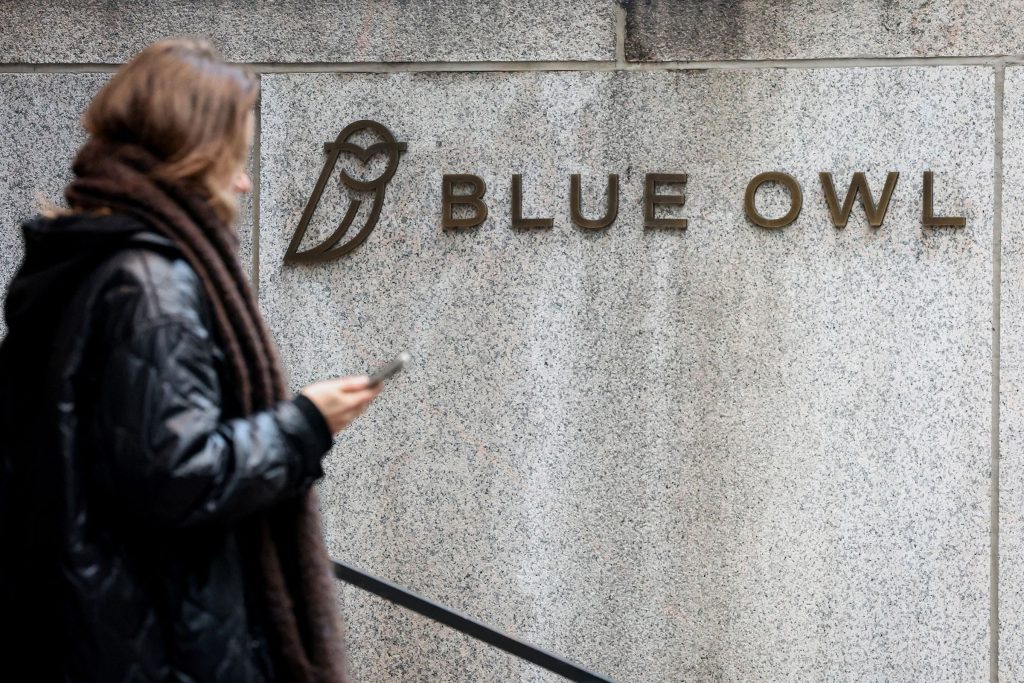
Imagine walking to your bank, looking through the glass doors, and seeing a sign that says you can only take out five cents for every dollar you own. For investors tied up in the once-booming world of private credit, that hypothetical nightmare just became a very real frustration. Blue Owl Capital, a titan in the alternative investment space, has officially hit the brakes on redemptions. After investors tried to pull a staggering $5.4 billion out of the firm’s coffers, the company exercised its right to limit withdrawals.
This move is sending a cold shiver through Wall Street and Main Street alike. For years, private credit was the “golden child” of the financial world, offering higher yields than traditional bonds while operating largely in the shadows of federal regulators. But as the tide goes out, we are starting to see who has been swimming without a suit. The news from Blue Owl isn’t just about one firm; it is a signal that the “unregulated lending” honeymoon phase might be coming to a messy end.
The Numbers Behind the Blue Owl Lockdown
The scale of the exit strategy is what has truly caught analysts off guard. Filings released this week show that investors in Blue Owl’s $20 billion Credit Income Corp fund asked to take back nearly 22% of their capital between January and March of 2026. If you think that sounds high, the situation in their tech-focused lending fund is even more dramatic. Investors there attempted to claw back over 40% of the total fund value.
When nearly half of your investors want out at the same time, it is usually a sign of a localized panic or a fundamental shift in market sentiment. In response, Blue Owl did exactly what their fine print allowed: they capped withdrawals at 5% per quarter. This means if you wanted your full investment back today, you might be waiting over a year to see the total amount hit your bank account. The firm claims this is for the “protection of remaining shareholders,” but for those who need liquidity now, it feels like being trapped in a burning building where the exit door only opens an inch at a time.
Why Is Everyone Running for the Exit?
To understand why $5.4 billion is suddenly looking for a new home, we have to look at what private credit actually is. Unlike a traditional bank that takes your deposits and lends them out under strict government scrutiny, private credit firms gather money from wealthy individuals and institutions to lend directly to businesses. These loans often go to companies that might be too risky or too small for a traditional bank.
The current “jitters” are largely tied to two things: the aggressive spending in the AI sector and a string of high-profile corporate failures. Because private credit firms have been heavily funding the AI infrastructure boom, there are growing fears that we are in a bubble similar to the dot-com era. If these AI startups fail to turn a profit, the private credit firms that funded them are the ones who lose the shirt off their back. We have already seen the cracks starting to form. Last year, firms like Tricolor and First Brands collapsed, and more recently, the mortgage lender Market Financial Solutions went under amid fraud allegations. When these “lemons” start appearing in the basket, investors naturally start wondering how many more are hidden at the bottom.
The Transparency Trap and the “Lemon” Problem
One of the loudest voices of caution lately has been Andrew Bailey, the Governor of the Bank of England. He recently used a powerful metaphor to describe the current state of the private credit market. He suggested that when a market lacks transparency, it becomes a “lemon” market. In economic terms, if you are buying a used car and you can’t see under the hood, you assume the car might be a lemon. If you find out your neighbor bought a lemon from the same dealer, you stop trusting the dealer entirely.
The private credit market is notoriously opaque. Because these firms don’t have to report to the public in the same way JPMorgan or Bank of America do, nobody really knows the true health of the loans on their books. Blue Owl insists that their “credit fundamentals” are resilient and that the withdrawals are just a result of “negative sentiment.” However, as Jamie Dimon famously warned, in these types of unregulated markets, there is rarely just one cockroach. Once the lights go on and you see one, you can bet there are dozens more scurrying behind the drywall.
Is This a Repeat of 2008?
The inevitable question everyone asks when withdrawal limits are imposed is whether we are looking at another systemic financial crisis. While the private credit market is massive—now measured in the trillions—it operates differently than the mortgage-backed security market of 2008. The risk today is more concentrated among high-net-worth individuals and institutional players rather than the average person’s checking account.
However, the “spillover” effect is real. If large investment funds are forced to sell other assets to meet redemption requests, it can drive down prices in the broader stock and bond markets. Furthermore, if companies can no longer get loans from private credit firms because those firms are “locking their gates,” we could see a massive credit crunch. Businesses that rely on this cash to meet payroll or expand will suddenly find the well has run dry. This is how a “private” problem becomes a public recession.
The Real World Impact of “Gate” Restrictions
For the individual investor, the Blue Owl situation serves as a stark reminder of the “liquidity premium.” You get higher returns in private credit specifically because your money is harder to get out. In good times, nobody cares about the 5% quarterly cap. In bad times, that cap becomes the only thing people can talk about.
The tech fund seeing a 40% redemption request is particularly telling. It suggests that the “smart money” is no longer confident that the AI-driven companies they lent to can pay them back. If you are an investor sitting on the sidelines, this is a signal to look very closely at the “fine print” of any alternative investment. The ability to enter a trade is easy; the ability to exit is what determines your actual wealth.
Final Thoughts: A Market in Search of a Bottom
Blue Owl Capital is a sophisticated firm, and they will likely survive this wave of redemptions by leaning on their legal safeguards. But the damage to the “aura” of private credit might be permanent. We are entering a phase of the market where transparency is going to be demanded rather than suggested.
The era of “easy money” and “shadow banking” is facing its first true test of the mid-2020s. Whether this is just a temporary dip or the beginning of a larger collapse depends on how many more “cockroaches” emerge in the coming months. For now, the message is clear: if you put your money in a room with a tiny door, don’t be surprised when there is a crush at the exit the moment someone yells “fire.”