
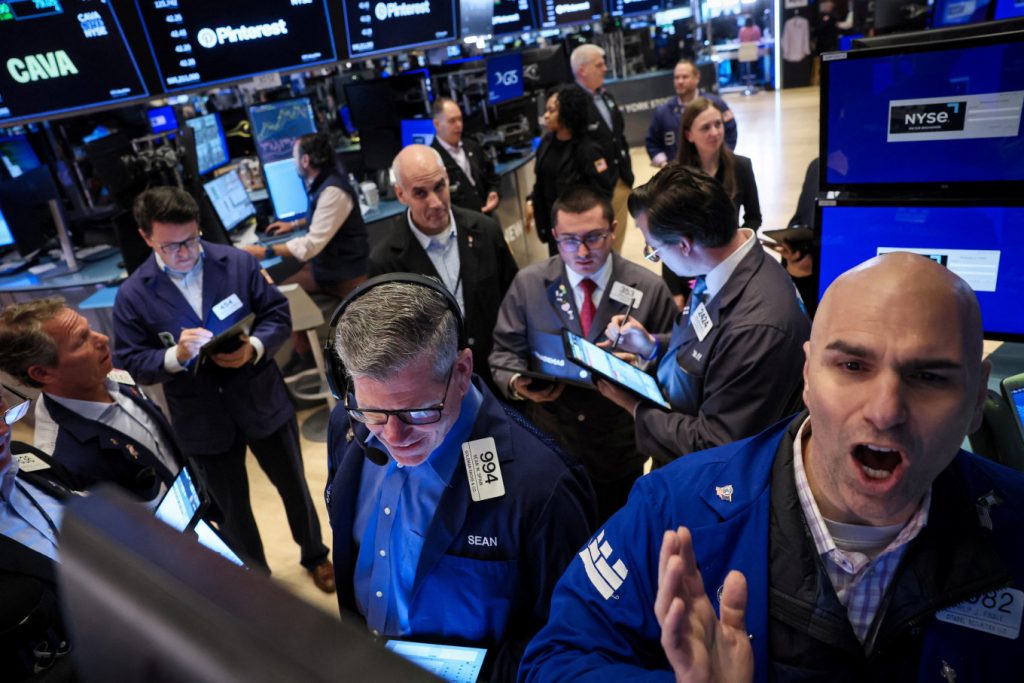
The global financial landscape shifted on its axis early Wednesday morning as a wave of optimism swept through Wall Street. In a move that caught many high-stakes commodity traders off guard, President Donald Trump announced a sudden two-week suspension of planned military strikes against Iran. This geopolitical pivot occurred just hours before a critical 8 p.m. ET deadline, effectively cooling a five-week conflict that had pushed the global energy supply to the brink of collapse and sent equity prices into a tailspin.
For those managing diversified investment portfolios, the news acted as a powerful catalyst for a massive relief rally. By 4:00 a.m. ET, futures tied to the Dow Jones Industrial Average had surged by an incredible 1,056 points. The broader market followed suit with S&P 500 futures adding nearly 2.5% and tech-heavy Nasdaq 100 futures leading the charge with a 3.2% jump. This sudden influx of capital highlights how sensitive wealth management strategies have become to geopolitical stability in the 2026 fiscal year.
The Massive Collapse of Crude Oil Futures
While the equity markets celebrated, the energy sector witnessed one of the most dramatic price corrections in recent history. The announcement that the United States would pause hostilities led to an immediate liquidation of long positions in the oil market. West Texas Intermediate (WTI) crude futures, a staple for those involved in energy commodity trading, tumbled more than 15% to settle near $95.75 a barrel. International benchmark Brent crude for June delivery saw a similar fate, losing over 13% of its value in a matter of hours.
This price drop is directly linked to the reopening of the Strait of Hormuz. For weeks, the closure of this vital waterway had choked the global energy supply, forcing US national gasoline prices to climb above $4 per gallon for the first time since the 2022 energy crisis. If the ceasefire holds, the reduction in energy price volatility could provide much-needed breathing room for the American consumer and lower the operational costs for logistics and manufacturing firms across the country.
Strategic Negotiations and the 10-Point Proposal
The breakthrough appears to have originated from an unconventional diplomatic channel. President Trump utilized Truth Social to inform the public that the US had received a comprehensive 10-point proposal from Tehran. He characterized the document as a “workable basis” for future negotiations, signaling a temporary shift from aggressive rhetoric to a more pragmatic approach. This “double-sided” ceasefire is contingent on Iran maintaining the free flow of maritime traffic through the Strait of Hormuz, a condition that Iran’s Supreme National Security Council has reportedly accepted for the duration of the two-week window.
The role of international mediation cannot be understated in this development. Pakistan’s Prime Minister, Shehbaz Sharif, played a pivotal role by publicly requesting an extension of the deadline to avoid strikes on Iranian infrastructure. With Israel also reportedly aligning with this temporary truce, the immediate risk of a regional war that could bankrupt global supply chains has diminished. However, financial advisors warn that a two-week window is a very short timeframe in the world of international diplomacy, and the market remains vulnerable to sudden news cycles.
Travel and Transportation Stocks Take Flight
The cooling of the Iran conflict has breathed new life into the travel and aviation sectors. Airline stocks, which are highly sensitive to fuel prices and global security risks, saw double-digit gains during early European trading. Carriers like Lufthansa and EasyJet surged by more than 10%, reflecting a renewed appetite for consumer discretionary spending. In the US, investors are closely watching Delta Air Lines as it prepares to report its quarterly earnings. The combination of lower jet fuel costs and increased stability in international travel routes could lead to significant upward revisions in airline profit forecasts.
Beyond the immediate price action, this rally serves as a reminder of the importance of risk management in a volatile market. The S&P 500 had been nearing a 10% correction in late March, a movement that had many retirement planners worried about a prolonged bear market. The current bounce suggests that there is still significant sidelined capital waiting for the right entry points, particularly in sectors that have been unfairly punished by the recent geopolitical premium.
A Critical Insight: Is This a Bull Trap?
While the 1,000-point jump is undeniably impressive, it is essential to analyze the situation with a degree of healthy skepticism. The market is currently reacting to the “absence of bad news” rather than the “presence of a permanent solution.” A two-week pause is a tactical delay, not a peace treaty. Professional traders are likely using this window to hedge their positions, as the underlying tensions between Washington and Tehran remain unresolved.
If the 10-point proposal does not lead to a formal agreement by the end of April, the market could face an even more severe pullback. For now, the bulls are in control, fueled by the prospect of lower inflation and a reopened global trade route. Investors should remain nimble, focusing on high-quality assets and maintaining a diversified approach to navigate the potential volatility that lies ahead at the end of this fourteen-day reprieve.
Key Market Statistics
| Market Index | Point Change | Percentage Change |
| Dow Jones Futures | +1,056 | 2.25% |
| S&P 500 Futures | +132 | 2.45% |
| Nasdaq 100 Futures | +480 | 3.20% |
| WTI Crude Oil | -$17.15 | -15.20% |
| DAX (Germany) | +1,034 | 4.80% |
Frequently Asked Questions (FAQ)
Why did the Dow Jones futures jump so high today?
The surge was driven by President Trump’s announcement to suspend attacks on Iran for two weeks. This move reduced the immediate threat of a major war, which would have disrupted global trade and increased inflation, prompting investors to buy back into the market.
How will the Iran ceasefire affect gas prices in the US?
Since the ceasefire includes the reopening of the Strait of Hormuz, crude oil prices have already dropped by 15%. This usually results in lower wholesale fuel costs, which should translate to cheaper gasoline at the pump for American drivers within the next week.
What is the 10-point proposal mentioned by President Trump?
While the full details are not yet public, the proposal is a diplomatic framework from Iran intended to resolve the conflict over the Strait of Hormuz. It serves as the basis for the current two-week negotiation period between the US and Iranian officials.
Is it safe to invest in stocks during a two-week ceasefire?
Investing during a temporary ceasefire carries both opportunities and risks. While the market is currently in a “relief rally,” the short timeframe means that volatility could return quickly if negotiations fail. Many advisors suggest focusing on long-term value rather than short-term geopolitical swings.
Which sectors benefit the most from lower oil prices?
Airlines, shipping companies, and logistics firms are the primary beneficiaries as their operational costs decrease. Additionally, consumer discretionary sectors like travel and retail often see a boost when gas prices fall, leaving more disposable income for households.