
Market volatility intensified on Monday as global oil prices witnessed a sharp spike following an escalation of military conflict between the U.S. and Iran. The surge comes as President Donald Trump signaled that the confrontation could be more protracted than initially anticipated, raising significant concerns over potential supply chain disruptions in the Middle East.
Energy Markets React to Geopolitical Tension
U.S. crude oil prices jumped more than 7%, while the international benchmark, Brent crude, surged 9%. This movement translates to an increase of nearly $6 per barrel. Even prior to this weekend’s escalation, oil prices had already climbed 17% this year, fueled by heightened rhetoric and tightened sanctions against the Iranian regime.
The impact is already being felt by consumers at the pump. According to data from GasBuddy, the U.S. national gas price average rose to $2.99 per gallon, with analysts predicting it could surpass the $3.00 mark shortly. Historically, retail gasoline prices shift approximately 2.5 cents for every $1 change in the price of crude oil.
Risk to Global Shipping and LNG Supply
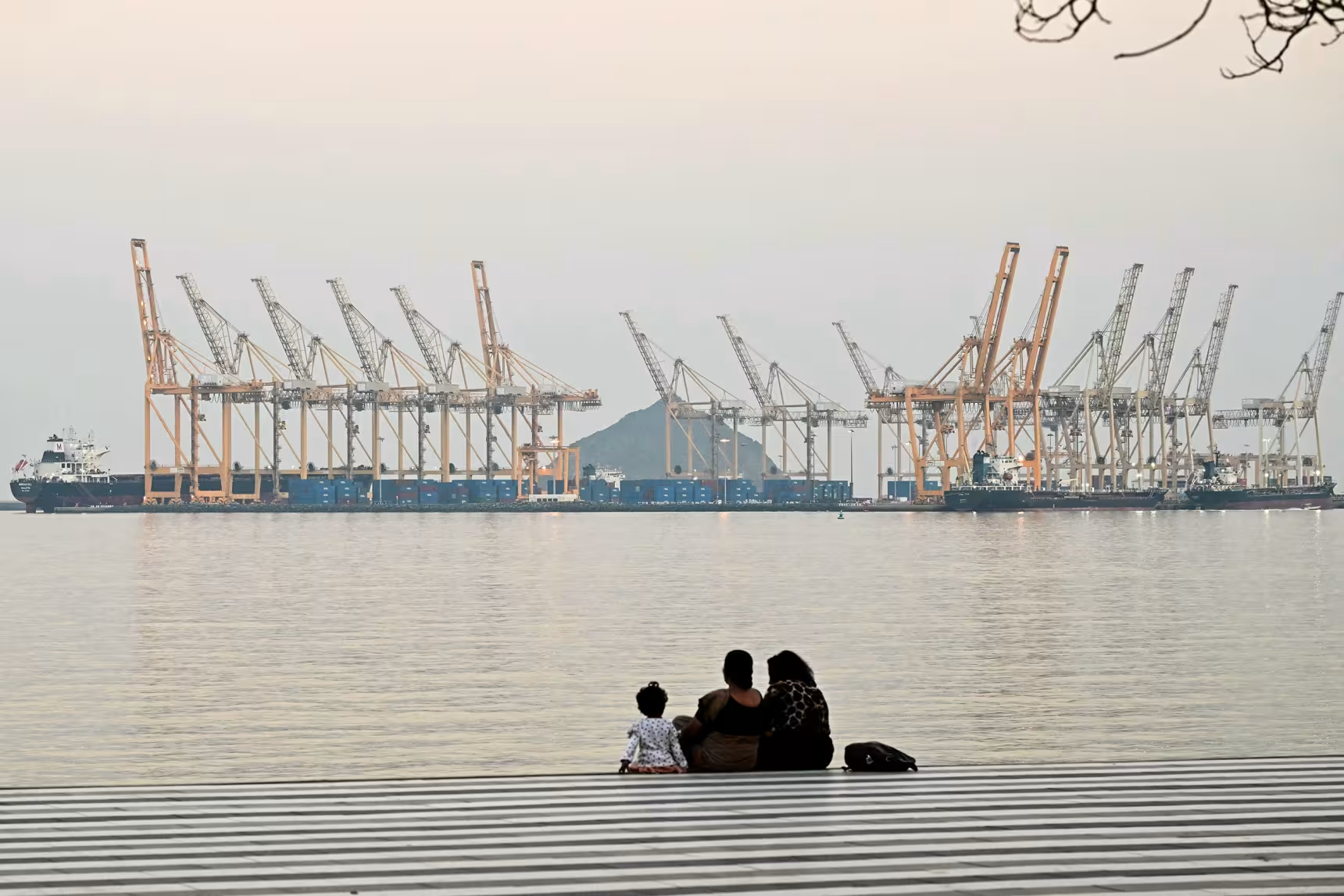
Beyond crude oil, the conflict poses a direct threat to the Strait of Hormuz, a vital maritime artery through which over 20% of the world’s daily oil demand passes. Several leading cargo and tanker companies have already halted or diverted vessels to avoid the conflict zone.
The volatility has also spread to the natural gas sector. Qatar, a leading exporter of Liquified Natural Gas (LNG), reported a pause in production following attacks on its facilities. While U.S. natural gas prices rose 5%, European natural gas futures skyrocketed by 45%, highlighting the region’s vulnerability to energy supply shocks.
Mixed Performance Across Global Equities
Financial markets displayed a “risk-off” sentiment, though U.S. indices showed resilience toward the closing bell.
- S&P 500: Ended the session nearly flat.
- Nasdaq Composite: Gained 0.3%, supported by tech resilience.
- International Markets: Faced steeper losses, with Germany’s DAX dropping 2.5% and Japan’s Nikkei sliding 1.4%.
Investors pivoted toward “safe haven” assets, driving gold futures up by 2% (over $100) and strengthening the U.S. Dollar Index by 1%.
Market Outlook and Stability Measures
In an effort to stabilize the market, eight OPEC+ nations announced plans to increase production by over 200,000 barrels per day starting next month. However, analysts at JPMorgan Chase suggest that the long-term trajectory of oil prices will depend on the duration of the disruption and the ability to mobilize alternative supplies quickly.
While historical geopolitical shocks often fade, a prolonged conflict could lead to extended inflationary pressure and continued volatility across global commodity and equity markets.