
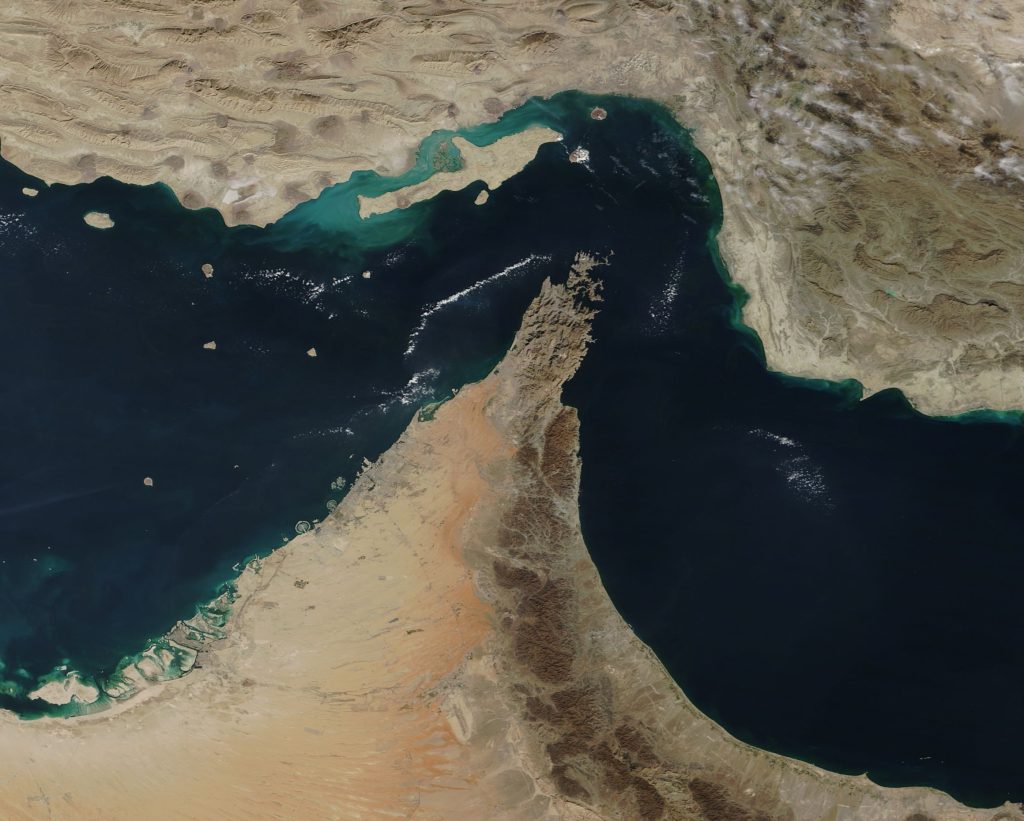
The global energy market is currently holding its breath as a high-stakes game of geopolitical chess unfolds in the Middle East. As of April 19, 2026, the situation in the Persian Gulf has reached a critical juncture where diplomacy meets raw naval power. Despite ongoing diplomatic efforts in Pakistan, Tehran is making one thing abundantly clear: they view their Hormuz maritime control leverage as their most valuable asset. While negotiators talk peace in air-conditioned rooms, the waters of the Strait of Hormuz remain a volatile flashpoint that could dictate the direction of the global economy for years to come.
Why Iran Views Hormuz Maritime Control Leverage as Essential
For the Iranian leadership, the ability to restrict traffic through the world’s most important oil chokepoint isn’t just about military posturing; it’s about survival and bargaining power. Mohammad Bagher Ghalibaf, Iran’s parliament speaker and top negotiator, recently underscored this by stating that peace talks do not equate to a stand-down of their armed forces.
The strategy is clear: Iran is utilizing its Hormuz maritime control leverage to force the United States to abandon its naval blockade and economic sanctions. By showing the world that they can effectively “turn off the tap” of global oil, Tehran aims to shift the “realities on the ground” in their favor. From their perspective, negotiating without control of the Strait would be akin to entering a fight with one hand tied behind their back.
The Readiness of the Revolutionary Guard
It is not just rhetoric. The Iranian Revolutionary Guard has remained active, recently asserting “coordinated routes” for commercial vessels. This suggests that even during a ceasefire, Iran intends to maintain a bureaucratic and military filter over who gets to pass. This internal readiness ensures that their Hormuz maritime control leverage remains a credible threat, even as diplomats like Vice President JD Vance attempt to find a middle ground.
Trump’s Response to Strategic Maritime Blackmail
President Donald Trump has not been silent regarding Tehran’s tactics. Labeling the Iranian moves as “getting a little cute,” the President has maintained a firm stance against what he calls “blackmail.” The U.S. administration’s logic is simple: if Iran is allowed to use its Hormuz maritime control leverage to dictate terms, the precedent for international maritime law would be shattered.
On April 12, Trump announced a counter-blockade, conditioning the reopening of the Strait on Iran’s total compliance with nuclear and maritime transparency. The White House is essentially betting that the U.S. can outlast Iran in a game of economic attrition. However, this “no-nonsense” approach also raises the stakes for potential naval skirmishes that could spiral out of control.
Gunboat Diplomacy and the UKMTO Reports
The risks of this standoff were highlighted by recent reports from the United Kingdom Maritime Trade Operations (UKMTO). Gunboats associated with Iran’s Revolutionary Guard reportedly opened fire on a tanker transiting the waterway. This act of aggression serves as a physical manifestation of Iran’s Hormuz maritime control leverage, proving that they are willing to use kinetic force to maintain their grip on the channel.
Economic Fallout: The High Cost of a Restricted Strait
For the average American, this isn’t just a headline about a distant sea; it’s a direct threat to their wallet. About a fifth of the world’s crude oil passes through this narrow passage. When Iran exerts its Hormuz maritime control leverage, the shockwaves hit the New York Stock Exchange and local gas stations almost instantly.
- Oil Price Volatility: We saw prices plunge 10% on Friday on hopes of a reopening, only to spike again as gunfire was reported.
- Shipping Industry Limbo: Large shipping firms, including those tracked by Kpler, are seeing their tankers turn back in confusion, unable to navigate the “coordinated routes” demanded by Tehran.
- Global Supply Chains: India has already summoned the Iranian ambassador after an Indian-flagged vessel was targeted, showing that this isn’t just a U.S.-Iran issue—it’s a global crisis.
The disruption is being called the largest oil supply disruption in history, highlighting exactly why Iran is so hesitant to give up its Hormuz maritime control leverage. It is the one tool that makes the entire world stop and listen.
Nuclear Ambitions Meet Naval Reality
The “nuclear dust” as President Trump calls it, remains the elephant in the room. Iran’s President Masoud Pezeshkian has been adamant that the U.S. cannot deprive the nation of its “nuclear rights.” This ideological battle is inextricably linked to the maritime one.
Tehran uses its Hormuz maritime control leverage as a shield for its nuclear program. By holding the global oil supply hostage, they hope to deter further U.S. military strikes on their damaged nuclear sites. Conversely, Trump is using the naval blockade to force Iran to hand over its enriched uranium stockpile. It is a classic deadlock where neither side wants to blink first.
The Path Forward: Can Diplomacy Break the Standoff?
While the Islamabad talks between JD Vance and Ghalibaf failed to reach an agreement last weekend, the door isn’t completely shut. The recent 10-day ceasefire between Israel and Hezbollah has provided a much-needed cooling-off period in Lebanon, which might bleed over into the Persian Gulf negotiations.
However, for any real peace to occur, the issue of Hormuz maritime control leverage must be addressed. Iran wants the U.S. to abandon “excessive demands,” while the U.S. wants a guarantee of free navigation.
Conclusion: A Fragile Balance
As we monitor the updates from the Persian Gulf, it is clear that the Hormuz maritime control leverage held by Tehran is the pivot point for all future negotiations. Whether through “coordinated routes” or outright blockades, Iran has shown that it will not easily surrender its grip on the world’s most vital energy artery.
For the Trump administration, the challenge lies in de-escalating the situation without appearing weak or susceptible to “blackmail.” Until a middle ground is found in Islamabad, the Strait of Hormuz will remain the world’s most dangerous—and most expensive—maritime chokepoint.