
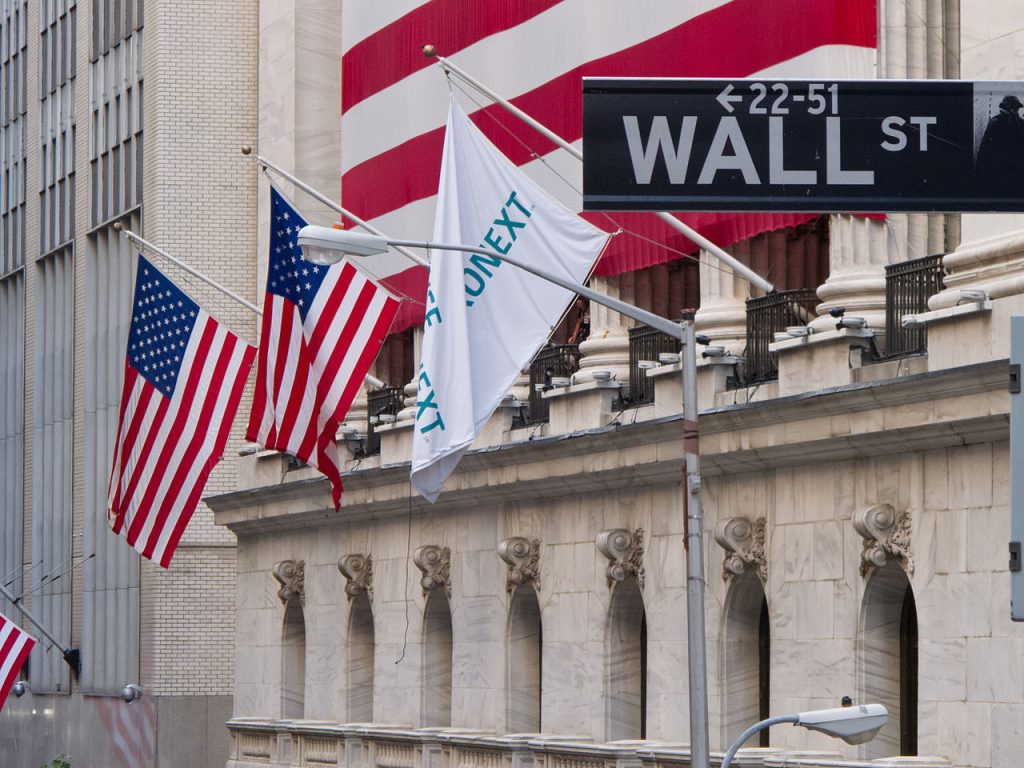
The honeymoon phase for Wall Street’s April rally just hit a major geopolitical roadblock. After the S&P 500 capped off its best weekly performance since late last year, the momentum has shifted toward caution as a critical 24-hour window approaches. Investors are now bracing for the Trump Iran deadline stock market impact, a development that has already sent crude oil prices higher and equity futures into the red.
On Sunday, President Trump issued a stark ultimatum via Truth Social, warning of significant strikes against Iranian infrastructure—specifically power plants and bridges—if the Strait of Hormuz is not cleared for international marine traffic by Tuesday. Dubbed “Power Plant Day” by the administration, this deadline has forced institutional desks to reassess their stock market volatility and oil price forecast for April 2026.
The “Power Plant Day” Ultimatum: Geopolitical Risk Meets Market Momentum
For the average investor, the headline “Power Plant Day” might sound like political rhetoric, but for the New York Stock Exchange, it represents a massive shift in the “risk-off” environment. Early Monday trading saw Dow Jones Industrial Average futures lose over 100 points, while the Nasdaq-100 and S&P 500 futures followed suit.
The primary concern is the Strait of Hormuz. As a chokepoint for roughly one-fifth of the world’s oil consumption, any prolonged disruption or military escalation in the region could fundamentally alter global inflation trajectories.
Why the Tuesday Deadline is a Market “Pivot Point”
- Binary Outcomes: The market is currently pricing in two extremes: a diplomatic breakthrough leading to a massive “relief rally,” or a military strike that could send oil toward historic highs.
- The “War Premium”: Energy traders are baking a “conflict premium” into every barrel, which is why we see WTI and Brent crude holding firm above $110.
- Safe-Haven Rotation: We are seeing a notable move toward defensive sectors, with “aerospace and defense stocks” and “precious metals” outperforming growth-oriented tech.
Crude Oil at $113: Why Energy Prices Are the New Inflation Threat
As of Monday morning, crude oil futures trading has become the primary indicator for broader market health. West Texas Intermediate (WTI) gained nearly 2% to trade at $113.53 per barrel, while Brent crude climbed to $110.44.
For the Federal Reserve and Wall Street analysts, these numbers are a flashing yellow light. High energy prices act as a regressive tax on the American consumer and a major input cost for nearly every S&P 500 company. If oil sustains levels above $110, the “inflation story” of 2026 could take a turn for the worse, potentially delaying anticipated interest rate cuts.
Investor Insight: High oil prices generally benefit the energy sector investment landscape in the short term, but they eventually act as a “growth killer” for the broader economy. Savvy traders are currently using “protective put options” to hedge their long positions in transportation and retail.
Decoding the March Jobs Report: A Labor Market “Limping Along”?
While the geopolitical drama dominates the headlines, Monday also marks the first time investors can trade on the March employment data. Despite the geopolitical noise, the fundamentals showed some surprising resilience—but with a catch.
The U.S. economy added 178,000 jobs in March, significantly higher than the consensus estimate of 59,000. On the surface, a falling unemployment rate (now at 4.3%) suggests a robust economy. However, as IFM Investors portfolio manager Ryan Weldon noted, the labor market may be “limping along” rather than sprinting.
The “Under the Hood” Realities:
- Lower Participation: The drop in unemployment was partially driven by a decrease in the number of people actively looking for work.
- Wage-Push Inflation: A tight labor market, combined with rising energy costs, creates a double-whammy of inflationary pressure.
- The Fed’s Dilemma: Strong jobs data gives the Fed more “hawkish” flexibility, meaning they can keep rates higher to fight the inflation caused by $113 oil.
The 45-Day Ceasefire: A Ray of Hope for Equity Futures?
Despite the aggressive rhetoric, a report from Axios suggests that a 45-day ceasefire is currently being discussed by mediators. This potential “diplomatic off-ramp” is the only reason stock futures didn’t fall further on Monday morning.
If a deal is reached before the Tuesday deadline, the market reaction could be explosive. A sudden de-escalation would likely trigger a short squeeze in the S&P 500, as traders who bet against the market are forced to buy back positions. However, until a signature is on paper, the “Tuesday Power Plant Day” threat remains the dominant narrative.
Portfolio Strategy: Navigating the Trump Deadline
In this environment, geopolitical risk management is the name of the game. Here is how professional desks are positioning for the week:
- Prioritizing Cash and Liquidity: Many traders are moving to higher cash balances to wait out the Tuesday deadline, looking for a clearer entry point once the “strike or no-strike” question is answered.
- Analyzing Defense and Cybersecurity: In the event of a conflict, these sectors historically act as “counter-cyclical” hedges.
- Monitoring Volatility (VIX): The “fear gauge” is likely to see spikes as the Tuesday deadline approaches. Short-term volatility trading can be lucrative, but it requires strict “stop-loss” discipline.
Final Thoughts: A High-Stakes Week for Wall Street
The transition from a “winning week” to a “volatile Monday” highlights just how sensitive the 2026 market is to geopolitical headlines. Between Trump’s Tuesday deadline and the underlying pressure of energy-led inflation, the margin for error for investors has narrowed significantly.
Whether we see a diplomatic miracle or a military escalation, one thing is certain: the market’s direction for the rest of the quarter will likely be decided by what happens in the next 24 hours.