
The financial landscape in April 2026 is proving to be a masterclass in market divergence. Investors woke up on Thursday to a sea of green across most of their tech portfolios, a welcome relief following a week of geopolitical tension that had many bracing for a prolonged downturn. This broad-based recovery suggests that the “flight to safety” might be easing, yet the celebrations are far from universal. While the tech sector at large is breathing a sigh of relief, two massive stories are casting a long shadow over the rally: a significant delivery miss for Tesla and a series of alarming security breaches within the artificial intelligence sector.
The narrative of the day is a complex one, driven by a mixture of international diplomacy and hard-hitting corporate data. President Trump’s speech on Iran late Wednesday night seems to have provided the stabilization the market was looking for, cooling fears of an immediate energy shock or direct conflict escalation. However, as the broader indices climb, certain cornerstones of the tech world are finding themselves on shaky ground. We are seeing a market that is becoming increasingly picky, rewarding companies that show resilience while punishing those that falter on their core promises.
The Tesla Delivery Slump and the End of the Growth Narrative
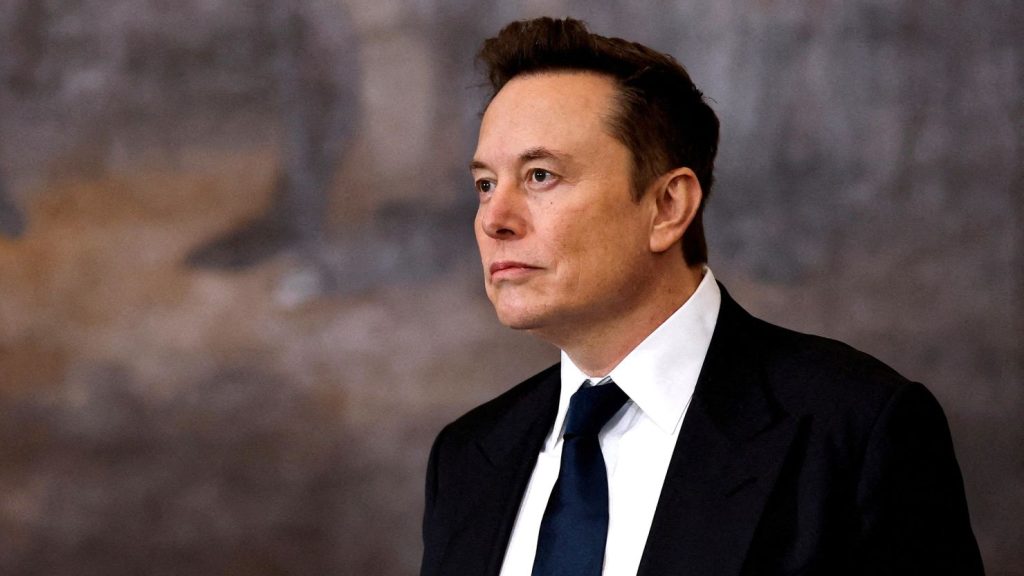
Tesla has long been the primary driver of retail investor enthusiasm, but Thursday’s performance felt like a cold shower for the “Musk-faithful.” The company’s stock plunged over 5%, making it the clear laggard among the Magnificent Seven. The catalyst for this sell-off was the release of first-quarter delivery numbers that failed to meet even the most conservative analyst estimates. For years, Tesla was valued not just as a car company, but as a high-growth technology juggernaut. When those delivery numbers stall, the math behind its premium valuation begins to look increasingly fragile.
The reasons for this miss are multifaceted and reflect a maturing, more competitive electric vehicle market. We are no longer in an era where Tesla is the only viable option for luxury EV buyers. Competitors have caught up in terms of range, luxury, and software integration, and the novelty of the brand is facing its first real test of longevity. Furthermore, high interest rates and a general cooling of consumer demand for big-ticket items in the US have made the “delivery-at-all-costs” model much harder to sustain. Investors are now asking whether Tesla’s best days of hyper-growth are in the rearview mirror or if this is merely a temporary logistical hurdle.
Geopolitics and the Cyber-Targeting of Big Tech
While the broader market rebounded on the back of de-escalating tensions, the IRGC’s recent announcement has added a new layer of risk to the tech giants. Names like Apple, Google, Nvidia, and Microsoft were explicitly listed as potential targets in the fallout of the current conflict. This is a significant shift from the oil shocks of previous decades. In 2026, the most valuable assets a nation possesses are no longer just pipelines and refineries, but data centers, proprietary algorithms, and semiconductor supply chains.
The fact that these stocks “wobbled” even as the rest of the market rose indicates that the “Cyber-Geopolitical Risk” is being priced in by institutional players. There is a growing realization that a conflict in the Middle East or elsewhere could manifest as a massive DDoS attack or a coordinated hack on US cloud infrastructure. For investors, this means that the safety of a blue-chip tech stock is now tied to that company’s ability to defend its digital borders. A company’s cybersecurity posture is now just as important as its quarterly earnings report.
The Anthropic Leak and the Growing Pains of Artificial Intelligence
Perhaps more concerning than the fluctuations in stock prices is the structural vulnerability currently being exposed in the AI industry. Anthropic, which has positioned itself as the “safety-first” alternative to other AI giants, is currently dealing with a nightmare scenario. The leak of the source code for its Claude AI agent app is not just a blow to the company’s pride; it is a significant security event that could have long-term implications for the entire sector.
When source code is leaked, it gives both competitors and malicious actors a roadmap to how the model functions. For competitors, it offers a glimpse into the proprietary logic and safety guardrails that Anthropic has spent billions to develop. For hackers, it provides a blueprint to identify exploits that could allow them to bypass safety protocols or manipulate the AI’s output. This breach, combined with a secondary failure at Mercor’s LiteLLM, has sparked a renewed debate about whether the rapid pace of AI development has outstripped the industry’s ability to secure its products.
The LiteLLM Breach and the Interconnectivity Trap
The breach at Mercor involving LiteLLM highlights a specific type of risk that many investors have overlooked: the danger of interconnectivity. LiteLLM acts as a bridge for enterprises to manage multiple different AI models under one roof. In the rush to integrate AI into every facet of business, companies have relied on these types of “gateways” to simplify their operations. However, as Thursday’s breach showed, these gateways can become single points of failure.
If a centralized tool like LiteLLM is compromised, it potentially exposes every model and every piece of data flowing through that bridge. This incident has caused a wave of anxiety among enterprise users who are now auditing their AI supply chains. The market is beginning to understand that the “AI Boom” isn’t just about who has the best chatbot; it’s about who has the most secure ecosystem. As we move closer to the anticipated IPOs of companies like Anthropic, these security failures will likely lead to more stringent due diligence and potentially lower valuations than previously expected.
Looking Ahead to the Anthropic and SpaceX IPOs
Despite the current headwinds, the appetite for new tech offerings remains high. The buzz surrounding a potential Anthropic IPO later this year continues to build, as investors are desperate for a pure-play AI stock that can compete with the established giants. However, the recent source code leak might force the company to be more transparent about its security measures during the roadshow. Investors will want to know exactly how Anthropic plans to protect its intellectual property in an era where state-sponsored hacking is a constant threat.
At the same time, the market is keeping a close eye on SpaceX. Elon Musk’s private aerospace giant remains the most anticipated public debut on the horizon. While Tesla’s struggles are weighing on Musk’s public profile, SpaceX continues to hit its technical milestones with remarkable consistency. Many analysts believe that a SpaceX IPO, or even a spinoff of its Starlink satellite internet business, could be the catalyst that restores confidence in the “Musk Ecosystem.” The contrast between Tesla’s manufacturing struggles and SpaceX’s technical triumphs is one of the most interesting dynamics in the market today.
Market Insight: The New Paradigm for Tech Investors
As we close out the first week of April 2026, the takeaway for the average investor is clear: the tech sector is no longer a monolith. The days when all tech stocks moved in lockstep are over. We are entering a period of extreme “dispersion,” where individual company performance and specific sector risks—like AI cybersecurity or EV delivery logistics—matter more than the overall market trend.
A rebound is a sign of resilience, but the underlying issues with Tesla and the AI sector suggest that we aren’t out of the woods yet. Investors should focus on companies that not only innovate but also have the infrastructure to protect that innovation. Cybersecurity is no longer a niche concern; it is the cornerstone of 21st-century value. Whether you are holding “Magnificent Seven” stocks or looking for the next big IPO, the ability to navigate these new risks will be the difference between profit and loss in this volatile 2026 market.