
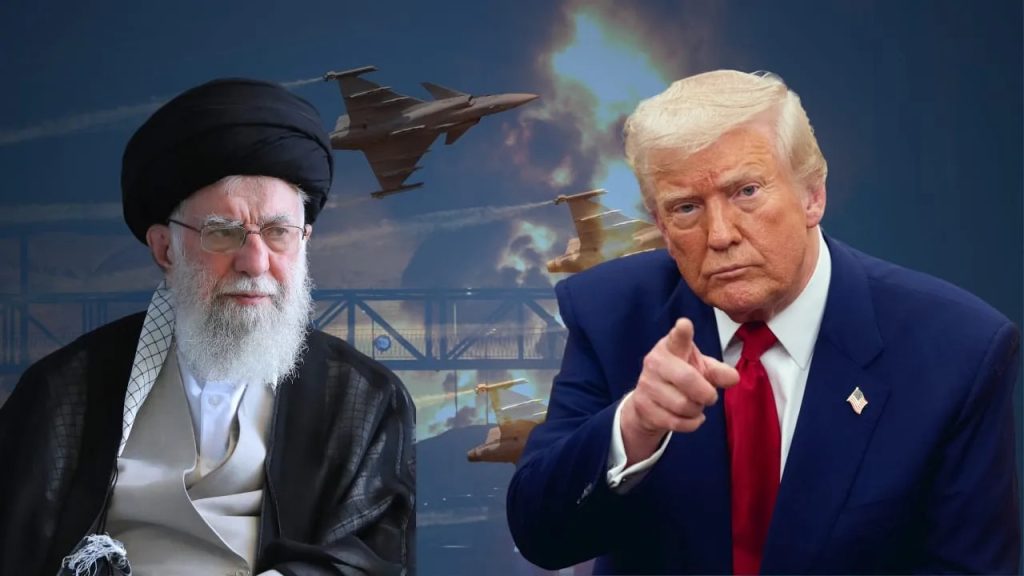
The Monday morning air after an Easter weekend usually feels a bit sluggish, but for Wall Street, the atmosphere is anything but calm. As we step into the first week of April 2026, the global financial landscape is tethered to a single, volatile thread: the conflict in the Middle East. This morning, we saw a noticeable green flicker on the screens as US stock futures climbed, fueled by whispers of a potential ceasefire deal with Iran.
It is a classic “buy the rumor” scenario. While the geopolitical situation remains incredibly tense, investors are desperate for any sign of de-escalation. But as with any story involving high-stakes diplomacy and aggressive rhetoric, the devil is in the details—and the details right now are as murky as a barrel of unrefined crude.
The “Ceasefire” Spark: Why Markets are Pivoting
The catalyst for this morning’s market movement was a report from Axios suggesting that US allies are making a frantic, last-minute push to secure a 45-day ceasefire. The logic is simple: if the guns go silent, even temporarily, the risk premium on everything from tech stocks to transport costs drops.
As of early New York trading, S&P 500 futures added 0.3%, while the Nasdaq 100 futures—the playground of sensitive growth stocks—jumped 0.5%. It’s not a “moon mission” rally, but in a thin-liquidity environment where many European and Asian markets remain closed for the holiday, it’s a significant move.
However, we have to temper this optimism with a healthy dose of reality. Iranian officials have already dismissed the proposal, calling it “irrational.” This creates a tug-of-war between the hope of the mediators and the hardline stance of the combatants. For the average investor, this means the current “relief rally” is built on a foundation of sand.
The Energy Factor: Crude Oil and the Strait of Hormuz
While stocks were heading up, crude oil prices took a breather. Brent crude dipped toward the $108 mark, and West Texas Intermediate (WTI) followed suit. The reason? It’s not just the ceasefire rumors; it’s about the “pipes” of global trade.
Investors are closely watching the Strait of Hormuz. Last week, we saw a few brave vessels—a French container ship and a Japanese tanker—successfully navigate the transit. Even more critical are the two Qatari LNG tankers currently attempting to exit the Persian Gulf. If they make it through without incident, it marks the first major export to outside buyers since the war began.
| Commodity / Asset | Performance Trend | Market Sentiment |
| West Texas Intermediate (WTI) | Down 1.3% ($110.57) | Cautiously Bearish on supply hopes |
| Brent Crude | Trading near $108 | Stabilizing on transit reports |
| Spot Gold | Up 0.2% ($4,687.30) | Bullish as an inflation hedge |
| Bitcoin | Up 3.2% ($69,772) | Risk-on appetite returning |
If the Strait remains functional, the “energy apocalypse” scenario remains at bay. But if President Trump follows through on his weekend threats to target Iranian civilian infrastructure, specifically power plants, we could see oil spike back into the $120s faster than you can say “inflationary pressure.”
The “Trump Factor”: Maximum Pressure vs. Maximum Risk
President Donald Trump is leaning heavily into his signature “maximum pressure” tactic. Over the weekend, his rhetoric was characteristically blunt, threatening to “blow up everything over there” if a deal isn’t reached. He has set a mysterious Tuesday 8 p.m. deadline, with a press conference scheduled for Monday at 1 p.m.
This creates a high-variance environment for traders.
- The Bull Case: Trump’s aggression forces Iran to the table, a 45-day ceasefire is signed, and the S&P 500 rips higher as the “war discount” evaporates.
- The Bear Case: The 1 p.m. press conference is purely combative, the ceasefire talks collapse, and we see a massive “risk-off” move where futures dump and gold/oil skyrocket.
As Sergio Avila of IG Group pointed out, this mix of coercion and negotiation leaves the market without a stable reference point. We are essentially trading on headlines, not fundamentals.
Market Snapshots: Where the Money is Moving
Despite the chaos, certain assets are showing us exactly where the “smart money” is hedging its bets. While the dollar weakened slightly, showing a decrease in “panic buying” of the greenback, the yield on 10-year Treasuries stayed steady at 4.35%. This suggests that while there is hope for peace, nobody is betting on a return to low inflation anytime soon.
| Market Segment | Current Movement | Analysis |
| S&P 500 Futures | +0.3% | Driven by ceasefire optimism and thin trading. |
| Euro (EUR/USD) | +0.3% ($1.1548) | Benefiting from a slightly weaker US Dollar. |
| Japanese Yen | +0.1% (159.45) | Remains weak but stabilizing against the USD. |
| Ethereum | +4.2% ($2,155) | Outperforming Bitcoin in the “risk-on” shift. |
Interestingly, Gold continues to hover near record highs ($4,687). Usually, ceasefire talk would send gold lower, but the persistent fear of long-term inflation—exacerbated by years of conflict and supply chain shifts—is keeping the yellow metal in high demand.
Insight: Why You Should Care About “Thin Liquidity”
Today is what traders call a “thin” market. With many global hubs closed, it doesn’t take much volume to move the needle. A single tweet or a leaked memo can cause a 0.5% swing in minutes.
For the retail investor, this is a dangerous time to “chase” the rally. The gains we see this morning are “tactical,” meaning they are based on the immediate hope of a deal. If that deal fails to materialize by Trump’s Tuesday deadline, the reversal could be swift and brutal.
Conclusion: A Week of High-Stakes Watching
As we move toward the 1 p.m. presidential press conference, the market is essentially holding its breath. The potential for a 45-day ceasefire is the “carrot” being dangled in front of investors, but the “stick”—Trump’s infrastructure threats—is still very much in play.
Expect volatility to remain the theme of the week. If you’re looking for stability, you won’t find it in the headlines today. However, the resilience of the US futures market in the face of such geopolitical uncertainty proves one thing: the American economy is remarkably eager to find any reason to grow, even in the shadow of war.