
If you’ve been following the artificial intelligence boom over the last couple of years, you probably think GPUs (Graphics Processing Units) are the only chips that matter. Nvidia has absolutely dominated the headlines, turning AI infrastructure into a one-horse race in the eyes of the public. But if you look closely at the architecture powering the web’s biggest platforms, a massive shift is happening right under our noses.
In a move that is sending shockwaves through Silicon Valley and Wall Street alike, Alphabet has just expanded the Google Intel AI data center partnership. Google has officially committed to utilizing multiple generations of Intel’s Central Processing Units (CPUs) to run its most demanding AI data centers.
Why is one of the world’s most advanced AI companies doubling down on traditional CPUs? The answer reveals a fascinating bottleneck in modern computing—and proves that the AI hardware wars are far from over.
The Evolution of a Silicon Valley Alliance
To understand the weight of this announcement, we have to look back. Google and Intel aren’t exactly new friends. In fact, the internet giant has relied heavily on Intel processors since its earliest days of building server racks nearly three decades ago. Whenever you ran a Google Search in the early 2000s, an Intel chip likely processed that query.
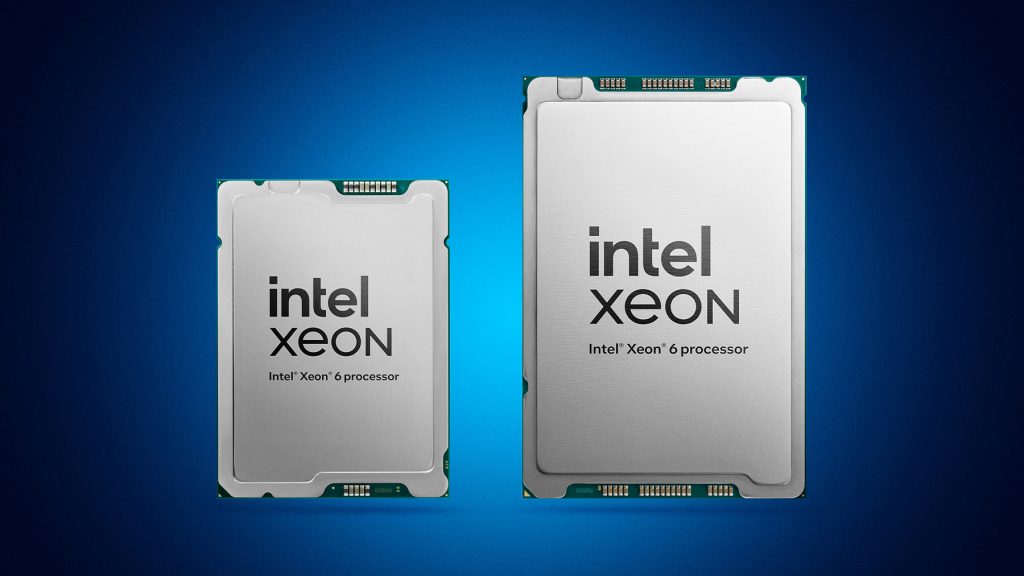
However, as AI took center stage, the narrative shifted entirely to accelerators and GPUs. Today, that narrative is correcting itself. With this newly expanded agreement, Intel’s cutting-edge Xeon 6 CPUs will be front and center, running highly complex AI training and inference workloads.
Google’s chief technologist for AI infrastructure, Amin Vahdat, summed up the decision perfectly. He noted that Intel’s aggressive Xeon roadmap gives Google the exact confidence they need to meet the exploding performance and efficiency demands of modern AI platforms. While financial terms remain tightly under wraps, Wall Street certainly noticed; Intel shares bumped up 2% on the news, signaling strong market approval for the legacy chipmaker.
How Intel Xeon 6 Processors Are Redefining AI Workloads
For a long time, the tech community viewed the CPU as a mere traffic cop for the much faster GPU. But as AI models evolve from simple chatbots into complex, autonomous “agentic” systems—AI that can reason, plan, and execute multi-step workflows—the compute needs are radically changing.
Overcoming the GPU Bottleneck
Here is a staggering piece of insight: even Nvidia recognizes the shifting landscape. Dion Harris, Nvidia’s head of AI infrastructure, recently admitted that CPUs are actually “becoming the bottleneck” in advanced AI data centers.
When an AI agent needs to pause, fetch data from a database, apply logic, and route information, it relies heavily on the CPU. If the CPU isn’t powerful enough, those multi-million-dollar GPUs end up sitting idle, waiting for instructions.
This is exactly where the Intel Xeon 6 processors step in. Built to handle massive parallel workloads and data routing with extreme efficiency, these new CPUs ensure that the entire system runs seamlessly. As Intel CEO Lip-Bu Tan accurately pointed out, scaling artificial intelligence requires much more than just raw accelerators. It requires perfectly balanced, holistic systems.
Intel’s Massive Comeback: Government Backing and Foundry Momentum
If we’re being honest, Intel has had a rough few years struggling to keep pace with agile competitors. But the tide is turning dramatically, and this Google deal is just the tip of the iceberg.
Over the past year, Intel shares have nearly tripled. This massive resurgence is fueled by an unprecedented injection of capital and strategic partnerships aimed at securing U.S. technological independence:
- Federal Support: In August of last year, Intel sold a 10% stake to the U.S. government. The Trump administration has heavily touted Intel’s unique ability to manufacture state-of-the-art chips entirely on American soil.
- Competitor Investment: In a shocking twist, Nvidia itself purchased a $5 billion stake in Intel last September, securing a vested interest in a robust domestic supply chain.
- The Arizona Megafab: Intel is currently manufacturing its latest Xeon processors using its most advanced “18A” technology at a newly opened, multi-billion-dollar fabrication plant in Arizona.
And let’s not forget the recent rumors confirmed by Lip-Bu Tan himself: Elon Musk has tapped Intel to design and fabricate custom chips for SpaceX, xAI, and Tesla at his massive Terafab project in Texas. Intel isn’t just surviving; it’s quietly becoming the foundational bedrock for the next decade of American tech infrastructure.
Custom Chips and the Future of AI Infrastructure
While the Xeon 6 announcement is grabbing the headlines, the Google Intel AI data center partnership goes much deeper than standard CPUs.
The IPU Collaboration Continues
Since 2022, Google and Intel have been co-developing a highly specialized piece of hardware known as an Infrastructure Processing Unit (IPU). Think of an IPU as the ultimate administrative assistant for a data center.
Four years ago, Google heralded this as a first-of-its-kind chip. Its primary job is to offload tedious “overhead” tasks from the main CPU. By handling network traffic routing, data encryption, storage management, and virtualization, the IPU frees up the Intel Xeon processors to focus entirely on heavy-lifting AI tasks. It is a masterclass in computing efficiency.
Balancing with TPU and Axion
It’s worth noting that Google isn’t putting all its eggs in one basket. The company is famous for its in-house silicon, having developed its custom AI accelerator (the Tensor Processing Unit, or TPU) for over a decade. Furthermore, in 2024, Google launched Axion, its own custom Arm-based CPU.
Yet, despite having its own proprietary hardware, Google’s massive commitment to Intel’s x86 architecture proves a vital point: the scale of global AI demand is so astronomically high that no single chip design can do it all. Tech giants need a diverse arsenal of processors to keep the internet running smoothly.
The Bottom Line: What This Means for the AI Race
The expanded partnership between Google and Intel is a massive reality check for the tech industry. It reminds us that the artificial intelligence revolution is not a sprint that ends with whoever has the fastest GPU. It is a marathon of infrastructure, power efficiency, and balanced system architecture.
Intel’s ability to secure long-term commitments from giants like Alphabet, while simultaneously building advanced fabrication plants in the US, signals a massive turning point. The CPU is no longer playing second fiddle; it has reclaimed its spot at the center of the data center stage.
For investors and tech enthusiasts alike, the takeaway is clear: watch the data center space closely. As AI models become more complex and agentic, the unsung heroes of computing—like the Intel Xeon 6—are going to be the literal engines driving the future of the internet.