
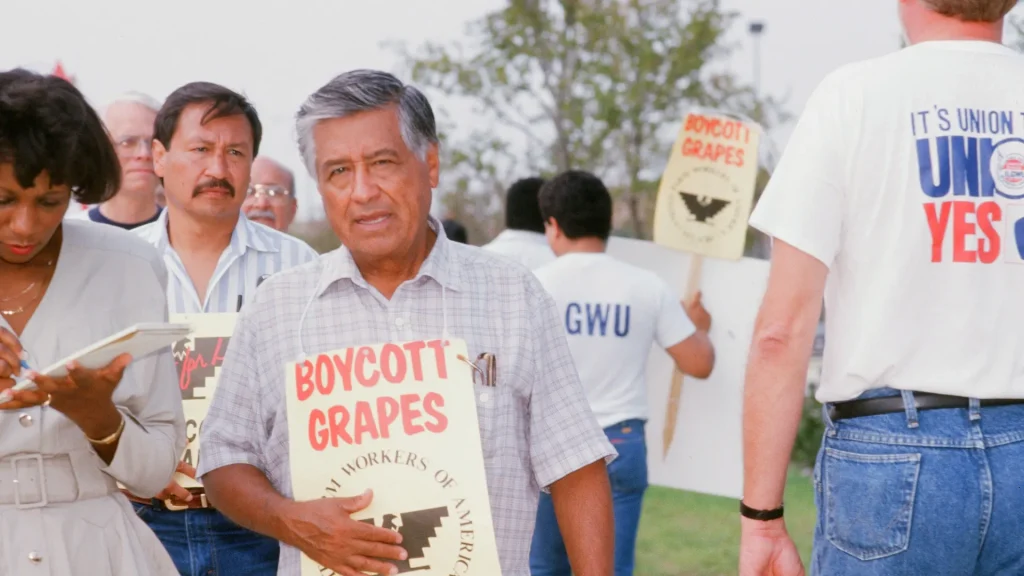
SAN FRANCISCO — New allegations against labor leader César Chávez are prompting an immediate and emotional reassessment of his legacy across the United States, March 18, 2026.
A recent investigation by The New York Times reported claims that Chávez sexually abused women and girls over several decades, raising questions about the historical narrative surrounding one of the most prominent figures in Latino civil rights and labor activism.
Chávez, who died in 1993, has long been viewed as a central symbol of Mexican American identity and the farmworker movement. The new allegations have led to swift reactions from public officials, academic institutions and community organizations.
Dolores Huerta, Chávez’s longtime collaborator and labor leader, said she was among those abused and that she became pregnant with two of his children. Her statement added to the growing scrutiny of Chávez’s personal conduct.
In response, several events commemorating Chávez were canceled in multiple states. Annual celebrations in California, Arizona and Texas, including those planned in Houston and Austin, were called off shortly after the report was published. A march in San Antonio had already been canceled earlier in the month.
Texas Gov. Greg Abbott and Arizona Gov. Katie Hobbs also announced their states would not observe César Chávez Day this year.
Lorena Oropeza, chair of ethnic studies at the University of California, Berkeley, said the allegations are deeply affecting the public’s perception of Chávez.
“The pain of these allegations is so palpable,” Oropeza said. “My heart goes out to so many women who decided or were told that silence was their best option for the good of the movement.”
Oropeza added the impact on Chávez’s legacy is likely to be “immediate and profound.” Faculty members at the University of California, Berkeley, are already drafting proposals to remove Chávez’s name from a student center, reflecting how institutions may respond.
Chávez’s legacy has also been closely tied to national politics. He worked with the Democratic Party on labor reforms, and his influence was recognized at the federal level. In 2012, the Obama administration established a national monument at his former California headquarters, and President Joe Biden later placed a bust of Chávez in the Oval Office.
Following the report, several Latino Democratic lawmakers issued statements condemning Chávez and expressing support for the accusers. Among them were Sens. Alex Padilla of California, Ben Ray Luján of New Mexico and Ruben Gallego of Arizona, along with Rep. Gabe Vasquez of New Mexico.
Historians noted that Chávez’s legacy has been under review for years, though his public image largely remained intact. Recent scholarship, including works by Matt Garcia and Miriam Pawel, has examined complexities in his leadership.
Lori Flores, a history professor at Columbia University, described the new allegations as “devastating on a deeper level.”
Some scholars said the moment could broaden public understanding of the farmworker movement beyond Chávez alone.
“The farmworker movement always was, and remains, much more than Chávez,” Flores said.
Cynthia Orozco, a historian and professor emeritus at Eastern New Mexico University, said the situation may shift recognition toward other leaders, particularly Huerta.
“It is time we acknowledge her even more,” Orozco said.
Oropeza said the reassessment, while painful, could lead to a more comprehensive understanding of the movement.
She said she hopes the revelations “will ultimately liberate the farmworker struggle from his shadow.”