
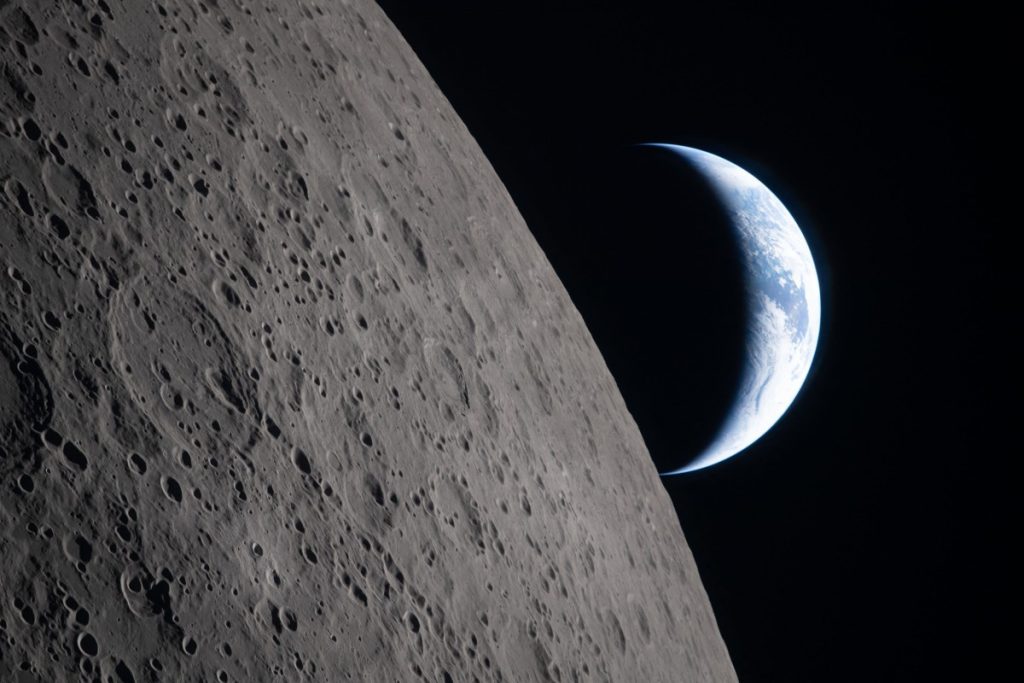
Space history is being made right before our eyes, and the excitement is absolutely palpable! Ever since NASA launched its highly anticipated lunar mission on April 1, millions of people worldwide have been glued to their screens, tracking the spacecraft’s every move. If you are searching for the definitive Artemis II current status 2026, you have landed in exactly the right spot. Welcome to Global Bursa Rakyat, your go-to hub for all things trending. Today, we are breaking down exactly where the Orion spacecraft is located, how the astronauts are holding up, and everything you need to know about today’s historic splashdown.
Artemis II Current Status 2026: The Epic Journey Home
For anyone tracking the Artemis II current status 2026, the biggest update is that the mission is officially in its final, thrilling return phase. After launching atop the massive Space Launch System (SLS) rocket from Kennedy Space Center on April 1, the spacecraft spent the last week achieving what humans haven’t done in over 50 years: flying past the Moon.
Following a flawless lunar flyby on Monday, April 6, the spacecraft fired its engines for the crucial return correction burns. As of today, Friday, April 10, 2026, the spacecraft is on a direct, high-speed trajectory back to our home planet. The European Service Module (ESM) has done its job perfectly, keeping the crew alive, powered, and on course. Now, it’s all about surviving the fiery re-entry through Earth’s atmosphere.
Where is Artemis 2 Now? (Current Position in April 2026)
One of the most frequently asked questions on Google this week is, “What is the current location of Artemis 2?” Right now, the Orion spacecraft is rapidly closing the distance between the Moon and Earth. Having reached a maximum distance of over 4,000 miles beyond the far side of the Moon (and over 230,000 miles from Earth), Orion is currently coasting “downhill” through the vacuum of space, pulled by Earth’s gravity.
If you are looking for the exact Artemis II current position April 2026, the capsule is just hours away from hitting the upper edges of Earth’s atmosphere. At this very moment, the spacecraft is hurtling toward us at thousands of miles per hour, preparing to shed its service module before the capsule alone makes the final plunge.
Current Distance from Earth Right Now
Because the spacecraft is accelerating as it gets closer to Earth, its distance is dropping by the second. By late afternoon today, it will be close enough to begin the highly complex re-entry sequence. It’s honestly mind-blowing to think about a man-made object traveling at roughly 24,500 mph (Mach 32) just to get back home!
What Are the Artemis II Astronauts Doing Right Now?
Naturally, folks are deeply curious about the humans inside that tiny capsule. Searches for the Artemis II astronauts current location or status 2026 have been skyrocketing. So, what are Commander Reid Wiseman, Pilot Victor Glover, Mission Specialist Christina Koch, and Canadian Space Agency astronaut Jeremy Hansen up to?
Right now, they are busy packing up. After spending 10 days living, working, and floating in the Orion capsule, the crew is stowing away loose gear, securing their trash, and making sure all science experiments and cameras are safely strapped down.
In a recent check-in, the crew sounded incredibly upbeat. Commander Wiseman noted that the crew has formed an unbreakable bond, and Pilot Victor Glover mentioned that witnessing a total solar eclipse from behind the Moon was the highlight of his life. As a space enthusiast, it gives me absolute chills just thinking about the views they’ve experienced. They aren’t just astronauts right now; they are the eyes and ears of humanity in deep space.
The Final Countdown: Splashdown on April 10
So, how does this 10-day space odyssey end? With a massive splash!
The Artemis II current status 2026 timeline confirms that splashdown is scheduled for today, April 10, in the Pacific Ocean off the coast of San Diego.
Here is what will happen in the final moments:
- Module Separation: The crew module will separate from the service module.
- The Fiery Plunge: Orion will hit the atmosphere, generating temperatures around 5,000°F (2,760°C)—about half as hot as the surface of the sun!
- Parachute Deployment: Around 8:03 p.m. EDT, the drogue parachutes will deploy, followed quickly by the main massive parachutes to dramatically slow the capsule down.
- Splashdown: The capsule will gently splash into the Pacific Ocean, where recovery teams aboard the USS John P. Murtha are already waiting to scoop them up.
Insight Check: It is worth noting just how crucial today’s heat shield test is. During the uncrewed Artemis I mission, the heat shield eroded a bit more than NASA expected. Today is the ultimate test to ensure this technology is completely safe for the human crew inside.
Why This Mission Changes Everything
As we refresh our screens waiting for the final Artemis 2 current status position April 2026, it’s important to step back and look at the bigger picture. Artemis II isn’t just a joyride; it is the ultimate dress rehearsal.
By proving that the SLS rocket, the Orion capsule, and the deep space tracking networks work flawlessly with a human crew, NASA is laying the groundwork for Artemis III. That next mission, slated for mid-2027, will actually put boots back on the lunar surface—including the first woman and the first person of color to walk on the Moon.
The fact that we get to sit in our living rooms with a smartphone and track the live location of humans navigating the lunar orbit is a beautiful reminder of how far technology has come.
Conclusion: Welcome Home, Artemis!
Tracking the Artemis II current status 2026 has been an absolute thrill ride for all of us here at Global Bursa Rakyat. From the roaring launch on April 1 to today’s nail-biting re-entry, this 10-day mission has recaptured the magic of the Apollo era for a brand new generation.
As we wait for those red and white parachutes to bloom over the Pacific Ocean today, let’s take a moment to appreciate the bravery of the four astronauts and the brilliant minds at NASA and the CSA. The Moon is no longer just a light in the night sky; once again, it is a destination. Welcome back to Earth, Artemis II!