
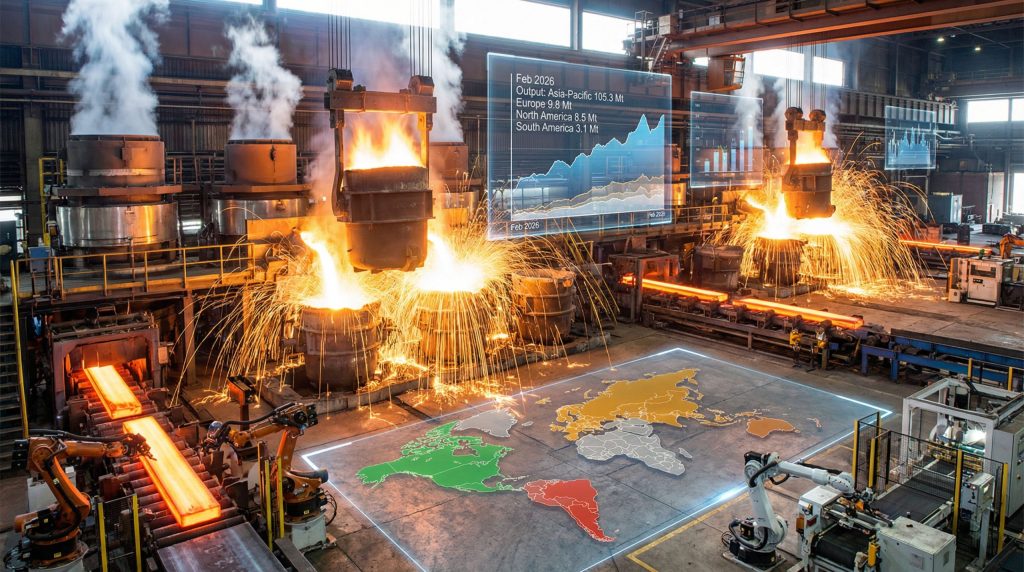
Steel is often viewed as a relic of the industrial past, a “boring” sector that lacks the flash and sizzle of Silicon Valley. However, as we move through 2026, the narrative has shifted dramatically. The American economy is currently undergoing a massive physical transformation. From the expansion of semiconductor fabrication plants in the desert to the massive overhaul of the national power grid, none of these 2026 milestones are possible without high-grade, domestically produced steel. For investors, this represents a unique window where legacy industrial reliability meets modern growth catalysts.
The “Rust Belt” has effectively rebranded itself as the “Silicon Belt,” with high-tech mini-mills replacing the smoke-belching giants of the 20th century. This transition toward Electric Arc Furnace (EAF) technology has not only made the industry greener but also significantly more profitable. When looking for the best steel companies to invest in 2026, the focus must be on efficiency, vertical integration, and the ability to capture the specific demand generated by the latest federal infrastructure initiatives.
The Landscape of the US Steel Market in 2026
The current year has seen a convergence of several pro-growth factors for domestic producers. Trade protections remain robust, ensuring that American manufacturers are shielded from global dumping practices. Meanwhile, the demand for “Green Steel” is no longer a niche request; it is a standard requirement for major automotive and construction firms aiming for net-zero targets. This environmental shift has created a two-tier market where companies with modern, low-emission facilities are commanding a significant price premium over traditional competitors.
To understand where the value lies, we must compare the primary players based on their strategic positioning and operational efficiency.
| Company Name | Ticker | Primary Focus | 2026 Strategic Advantage |
| Nucor Corporation | NUE | Diversified Steel Products | Lowest cost of production and massive scale. |
| Steel Dynamics | STLD | Flat-Roll & Structural Steel | Highest profit margins and aggressive expansion. |
| Cleveland-Cliffs | CLF | Automotive & Iron Ore | Full vertical integration from mine to mill. |
| United States Steel | X | High-Tech Flat-Rolled | Pivot to “Best for All” strategy and EAF expansion. |
Nucor Corporation (NUE): The Undisputed Gold Standard
Nucor continues to be the most resilient name in the sector for 2026. Their business model is built on a decentralized structure that allows individual mills to operate as independent profit centers. This flexibility is vital in a year where economic signals have been mixed. Nucor does not rely on massive, expensive-to-maintain blast furnaces. Instead, they utilize scrap metal and EAF technology, which allows them to ramp production up or down in response to real-time market demand without the catastrophic overhead costs that plague legacy producers.
The company’s commitment to shareholder returns remains a cornerstone of its investment thesis. As a long-standing Dividend Aristocrat, Nucor has provided a sense of security for investors during the volatile market cycles of the early 2020s. In 2026, their diversified product line—ranging from steel joists for warehouses to sophisticated plate steel for naval vessels—means they are not overly dependent on any single sector of the economy. If residential construction slows, their heavy involvement in public infrastructure and energy projects typically picks up the slack.
Steel Dynamics, Inc. (STLD): The Efficiency Engine
If Nucor is the steady veteran, Steel Dynamics is the high-performance athlete of the industry. Based in Indiana, STLD has consistently reported some of the best operating margins in the global steel trade. Their secret lies in a relentless focus on new technology and circular economy principles. By controlling their own scrap metal supply through their OmniSource subsidiary, they have insulated themselves from the price fluctuations of raw materials that often eat into the profits of their rivals.
A major catalyst for Steel Dynamics in 2026 is the full maturation of their Sinton, Texas facility. This mill was designed to serve the booming manufacturing hubs in the Southern US and Mexico. As more companies “reshore” their production from overseas to the North American corridor, Steel Dynamics is perfectly positioned geographically to be the supplier of choice. Their move into aluminum flat-rolled products also provides an interesting hedge, as the automotive industry increasingly looks for lightweight materials to extend the range of electric vehicles.
Cleveland-Cliffs (CLF): The Master of the Supply Chain
Cleveland-Cliffs represents a different kind of investment opportunity. Under the leadership of Lourenco Goncalves, the company has undergone a total metamorphosis. They are now the largest producer of flat-rolled steel in North America and the primary supplier to the domestic automotive industry. Unlike Nucor or STLD, Cleveland-Cliffs is vertically integrated. They own the iron ore mines, the pellet plants, and the finishing mills.
In an era where supply chain disruptions have become a recurring nightmare, Cleveland-Cliffs offers a “closed-loop” security that is highly attractive to major manufacturers like Ford, GM, and Stellantis. By controlling the raw materials, they can guarantee quality and delivery schedules that others cannot. While their debt levels were a concern in previous years, the robust cash flows of 2025 and 2026 have allowed them to aggressively deleverage their balance sheet, making the stock a much more attractive value play for conservative investors today.
Key Financial Metrics Comparison for 2026
When deciding where to allocate capital, it is essential to look at the hard numbers. The following table provides a snapshot of where these companies stand in the current 2026 fiscal environment based on projected performance and market valuation.
| Metric | Nucor (NUE) | Steel Dynamics (STLD) | Cleveland-Cliffs (CLF) |
| Forward P/E Ratio | 12.4 | 10.8 | 8.5 |
| Dividend Yield | 1.8% | 1.5% | 0.0% (Focus on Buybacks) |
| Debt-to-Equity | 0.35 | 0.42 | 0.85 |
| Revenue Growth (YoY) | 5% | 7% | 4% |
The “Green Steel” Factor as a Competitive Moat
In 2026, environmental compliance is no longer just a regulatory hurdle; it is a competitive advantage. The US steel industry is significantly cleaner than its counterparts in China or India because of the widespread adoption of EAF technology. This allows US companies to market their products as “low-carbon steel,” which is becoming a requirement for federal contracts under the Buy Clean Task Force guidelines.
Investors should note that companies like Nucor and Steel Dynamics are already leaders in this space. They utilize renewable energy to power their mills and recycle millions of tons of scrap every year. This “green premium” is likely to keep profit margins high even if global steel prices face downward pressure. It also makes these stocks eligible for inclusion in many ESG-focused ETFs, providing a steady stream of institutional buying pressure that supports the stock price.
Final Insight: Choosing the Right Strength
Investing in steel in 2026 requires a shift in mindset. It is no longer a play on a dying industry but a bet on the physical rebuilding of America. My personal take is that while the entire sector looks healthy, the “winner” depends on your specific risk appetite. If you want a defensive play that will pay you to wait, Nucor is the gold standard. However, if you are looking for the most aggressive growth profile tied to the reshoring of American manufacturing, Steel Dynamics offers the best combination of innovation and execution. Cleveland-Cliffs remains the best option for those who believe the US automotive sector will continue its dominance in the EV era. Regardless of the choice, the “Hard Assets” play is proving to be a wise move in a 2026 economy that values tangible production over speculative growth.