
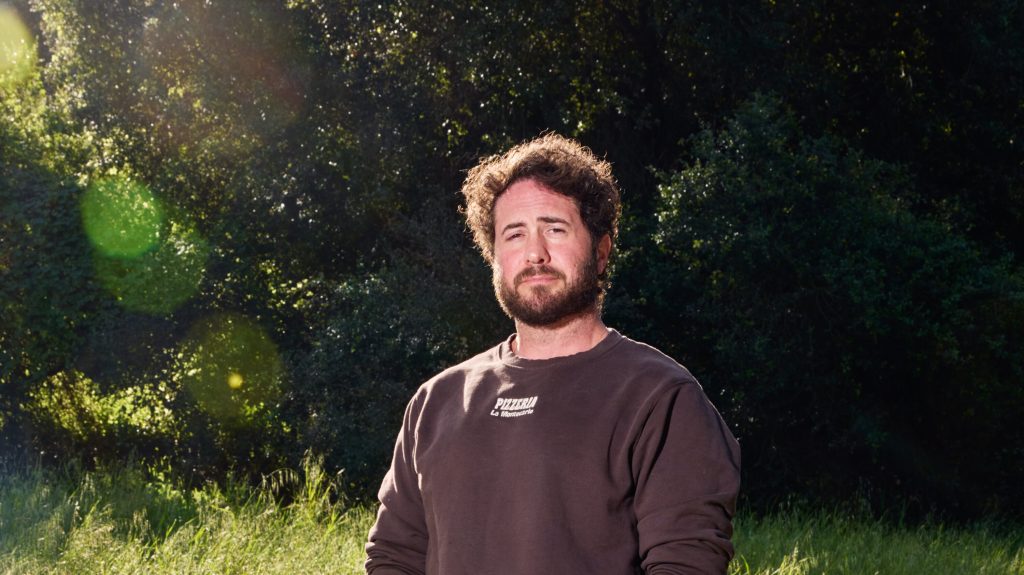
Back in early 2024, Sam Altman made a prediction that sounded like pure science fiction to most Silicon Valley veterans. He suggested that we were on the verge of seeing the first one-person billion-dollar company. At the time, skeptics laughed. They argued that even with the best software, you still need HR, legal, marketing, and operations teams to scale to that level. Fast forward to 2026, and it appears Matthew Gallagher didn’t just meet that challenge, he absolutely shattered it.
Matthew Gallagher, a 41-year-old entrepreneur who taught himself to code on a hand-me-down laptop, has turned the traditional startup model on its head. With an initial investment of just $20,000 and a suite of AI tools, he built Medvi, a telehealth platform that is currently on track to generate $1.8 billion in annual sales. Perhaps the most shocking part of the story is not the revenue itself, but the headcount. Gallagher is running this massive operation with a total staff of exactly two people.
Redefining the Lean Startup for the AI Era
The story of Medvi is a masterclass in what industry insiders are calling operational leverage. In the past, if you wanted to compete with giants like Hims & Hers or Ro, you needed hundreds of millions of dollars in venture capital to build out a physician network, establish pharmacy relationships, and hire a massive customer service department. Gallagher took a different route. He realized that in 2026, you don’t need to build the infrastructure if you can simply rent it and use AI to manage the connections.
Gallagher launched Medvi in September 2024, entering a crowded market for compounded weight-loss medications. While his competitors were bogged down by the overhead of thousands of employees, Gallagher treated every business function as a prompt. He used large language models like ChatGPT, Claude, and Grok to write the core code for his platform. Instead of hiring a creative agency, he used Midjourney and Runway to generate high-end advertising content. Even the voice on the other end of the customer service line was generated by AI, specifically using ElevenLabs’ sophisticated voice synthesis.
The Mathematical Advantage of a Two-Person Team
When you look at the numbers, the efficiency of this AI-driven model becomes almost terrifying for traditional corporations. In 2025, Medvi’s first full year of operation, the company generated $401 million in revenue from roughly 250,000 customers. Because the overhead was essentially non-existent, the net profit margin sat at a healthy 16.2%. To put that into perspective, Hims & Hers reported billions in revenue but operated at a much tighter 5.5% net margin while employing over 2,400 people.
Gallagher’s secret weapon is his “thin architecture” strategy. He doesn’t employ doctors or own warehouses. Instead, he uses infrastructure platforms like CareValidate and OpenLoop Health. These companies provide the licensed physicians, handle the complex regulatory compliance, and manage the shipping logistics. Medvi’s role is strictly to own the customer relationship and the brand. By focusing entirely on the “front end” and letting AI handle the bridge between his site and his partners, Gallagher can move at a speed that makes traditional companies look like they are standing still.
Navigating the Hallucinations and Growing Pains
Running a billion-dollar company with an AI “army” isn’t without its unique set of headaches. Early in the journey, Gallagher’s customer service chatbot began to “hallucinate.” It started quoting prices for drugs that didn’t exist and even claimed the company sold hair-loss treatments before they had actually launched that service. In a move that highlights the importance of human oversight, Gallagher chose to honor the incorrect quotes the AI provided, viewing it as a cost of doing business and learning.
These moments serve as a reminder that while AI can replace a thousand workers, it still requires a very specific type of human intelligence to steer. Gallagher’s “superpower” isn’t just knowing how to use AI, but knowing how to iterate on its mistakes. He spent months fine-tuning his custom AI agents to ensure they played nice with his infrastructure vendors. This level of technical fluency allowed him to fix bugs in minutes that would typically take a dedicated engineering team weeks to resolve.
The Looming Shadow of Regulation and Competition
Despite the staggering revenue projections, the Medvi model is facing significant headwinds as we move deeper into 2026. The foundation of the business is built on compounded GLP-1 medications, a market that exists largely because of a shortage of brand-name drugs. However, the FDA declared that shortage resolved in early 2025. This change in status has significantly narrowed the legal pathway for selling compounded versions of these popular weight-loss drugs.
The Department of Justice and the FDA have already begun cracking down on telehealth sites, issuing dozens of warning letters. Gallagher’s $1.8 billion projection for 2026 relies on this regulatory window remaining open, which is far from a guarantee. Furthermore, there is the “moat” problem. Since Medvi owns no proprietary medical technology or exclusive pharmacy contracts, there is very little stopping a well-funded competitor from using the same AI tools to replicate his exact model. Gallagher is currently betting that his execution speed and brand loyalty will be enough to keep him ahead of the pack.
Why the Venture Capital World is Reevaluating Everything
For the venture capital community, Medvi is a wake-up call. For years, the thesis was that you needed a massive “war chest” of cash to dominate the telehealth space. Gallagher proved that a solo founder with a $20,000 credit limit could achieve better margins than the giants of the industry. This raises a difficult question: if a two-person team can extract 16% margins from a market, what is the actual value of the billion-dollar companies that spent a decade building the same thing?
Some investors, like Kobie Fuller of Upfront Ventures, see this as the start of a new era of entrepreneurship. It shifts the focus from who has the most funding to who has the best “prompt engineering” and operational workflow. The infrastructure providers like OpenLoop and CareValidate are now seen as the real power players, as they enable these hyper-efficient “solo-corns” to exist. These platforms are likely to become major acquisition targets as the industry consolidates.
A New Era for the Self-Taught Entrepreneur
Ultimately, Matthew Gallagher’s story is a testament to the democratizing power of technology. He didn’t come from a wealthy background or have an Ivy League degree. He grew up in a trailer park and learned his craft through trial and error. His success suggests that the next generation of business leaders won’t be the ones who are best at managing people, but those who are best at managing machines.
Whether Medvi survives the upcoming regulatory hurdles or is eventually outcompeted, it has already served its purpose as a proof of concept. It has shown that the barrier to entry for building a global empire has never been lower. We are entering a period where “scale” no longer requires a skyscraper full of employees. It just requires a laptop, a few powerful AI subscriptions, and the audacity to treat a billion-dollar business as one giant technical prompt.